Affiliate disclosure: Best3 is reader-supported. When you buy through links on this page, we may earn an affiliate commission from Amazon at no extra cost to you.
Learn more.
🏡 Category guide
Best 3 Senior-Friendly Home Products on Amazon
The best senior-friendly home products do one thing exceptionally well: they reduce the risk of the falls and strains that land older adults in the hospital, without making the home feel like a hospital ward. For bathroom aids, weight capacity and a wobble-free fit matter far more than clever folding tricks; a rail that shifts when you lean on it is worse than no rail at all. For night-time safety, the right answer is automatic, battery-powered lighting along the bed-to-bathroom path — seniors won't fumble for a switch they can't see. And when a product needs installation, choose one that works out of the box; tools, drilling, and wall mounts are failure points. Every pick below is a long-running Amazon bestseller with thousands of real-world reviews from buyers caring for parents and grandparents.
Last researched September 28, 2026
How to choose
Senior-friendly home products have one job above all: reduce the risk of falls and strains without making the home feel like a hospital ward. The bathroom deserves attention first, because most serious falls happen on wet tile, and the right aids there matter more than gadgets elsewhere. Stability beats cleverness every time: a rail that shifts when leaned on is worse than no rail at all, and a bench that wobbles on a wet floor creates the very danger it should prevent. Night-time safety is the second priority, since the bed-to-bathroom path in darkness is where many falls happen.
The tiers here are not three versions of one product; they are three different safety jobs, ranked by impact. The best overall pick is the bathroom safety frame: a freestanding, adjustable frame that fits around nearly any toilet without drilling or tools, with suction feet that keep it planted on tile. The best value pick is the night-time lighting solution: a set of stick-anywhere motion-sensor lights that light the entire path from bed to bathroom automatically, at a very low cost per light. The premium pick is the clinical-grade shower bench: a full-size bench with backrest and armrests from a brand used in medical settings, for when standing in the shower is no longer safe. Together they cover the two highest-risk moments: using the toilet and showering, plus the dark walk between bedroom and bathroom.
Who should pick which item depends on the person's specific risks, not on tier labels. If getting on and off the toilet is the struggle, the safety frame is the first buy. If night-time trips to the bathroom are the worry, the motion lights are the single most cost-effective upgrade, and they should come first for many households. If standing in the shower has become unsafe or tiring, the shower bench is the right answer, even though it needs a shower floor large enough to fit it.
The common mistakes are about fit and false economy. The first is buying a rail or bench rated below the user's weight or too wide for the tub, which wastes money and creates danger. The second is prioritizing folding tricks or compactness over a wobble-free fit, when stability is the whole point. The third is skipping night lighting because it seems too simple, when automatic lights prevent the early-morning falls that send people to emergency care. The fourth is choosing products that need installation help and then delaying that help, leaving the risk in place. Measure the toilet, the shower floor, and the night path before ordering, and check suction feet and fit regularly after installation.
Buying guide expanded October 2026
What the reviews reveal
The mistake families keep making with senior-friendly products is buying for the average bathroom instead of their own bathroom. A toilet frame that fits most toilets, a shower chair that fits most showers, and lights that stick anywhere all sound universal until they meet a textured tub floor, a narrow tub, a wooden hallway wall, or a toilet with an unusual footprint. The unglamorous pre-purchase step, measuring the toilet, the shower floor, and the night path, and checking whether the floor is smooth enough for suction, prevents more returns and more risk than any feature comparison.
The tradeoff that matters most in daily use is stability against convenience. Freestanding, foldable, and stick-on products are easy to install and easy to move, which is exactly why families choose them, but that same freedom means they can shift, tip, or fall off when leaned on hard from one side or dragged across a floor. Bolted and heavier options are less convenient and harder to install, but they do not move when they are needed most. For bathroom aids, the right question is not how easy it is to set up, it is how it behaves on the worst day, when someone is tired, wet, and putting their full weight on it.
The recurring surprise is how much maintenance these supposedly set-and-forget products need. Suction feet need re-checking, wing nuts need re-tightening, adhesive needs replacing, and batteries fade quietly until a hallway goes dark. The families who get the most from these products treat them like smoke alarms: installed once, then checked on a schedule, because a safety aid that has silently loosened or died is worse than no aid at all, since it invites the confidence without providing the support.
1Best OverallTop Rated
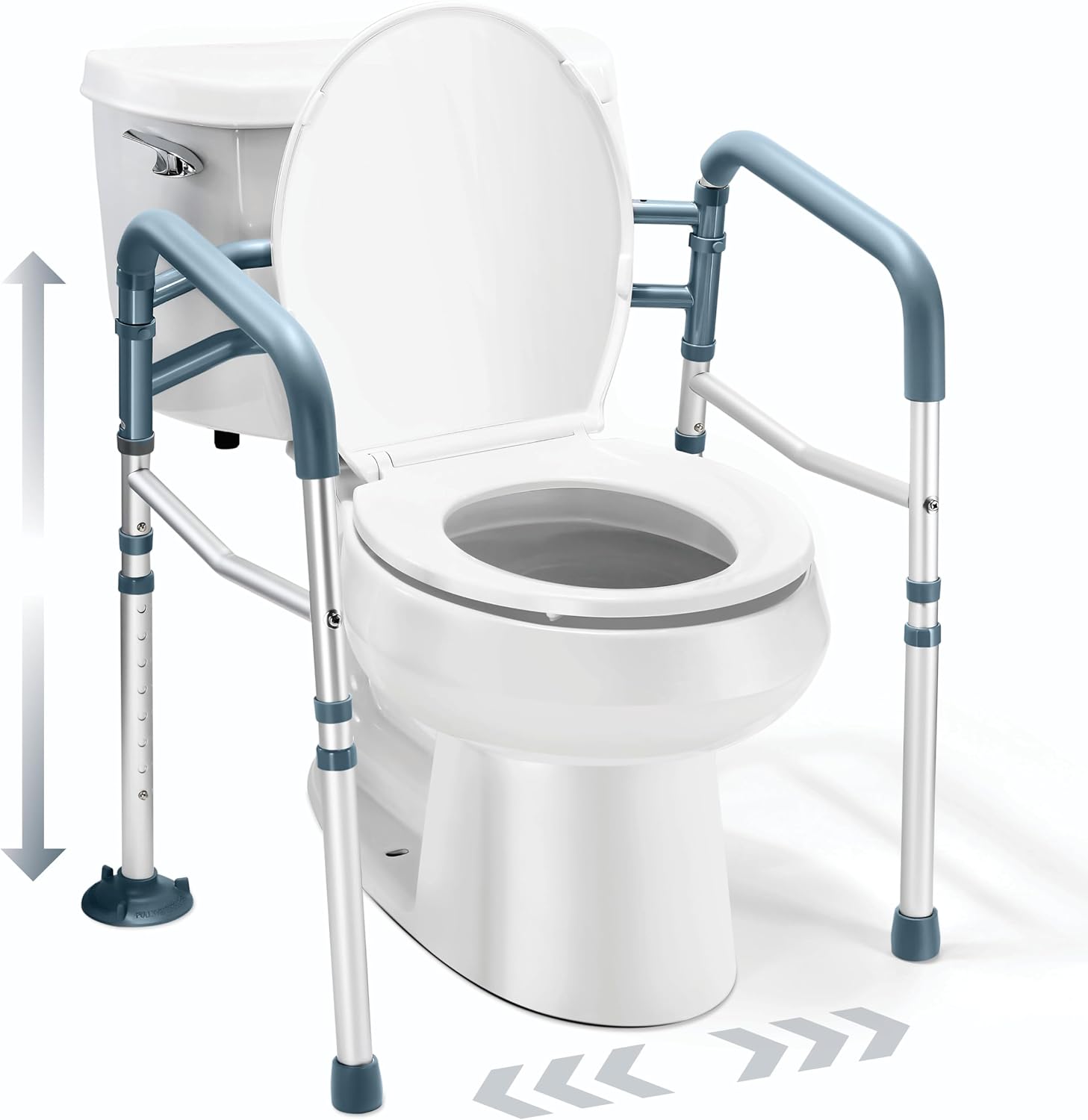
Medical king Toilet Safety Rail
“The most-reviewed standalone toilet safety frame on Amazon, with adjustable height and width so it fits around nearly any toilet without drilling or tools.”
- Freestanding aluminum frame rated for up to 300 lbs, with extra-strong suction-cup feet that keep it planted on tile floors
- Height- and width-adjustable legs fit both round and elongated toilets, and it folds flat for storage or travel
- 4,000+ reviews at 4.4 stars, with reviewers consistently praising the 10-minute tool-free assembly
The tradeoff: It stands on the floor rather than bolting to the toilet, so it can shift slightly if someone yanks sideways on one handle — position it snugly and check the suction feet monthly.
Who it's for: For households where getting on and off the toilet is the main struggle. Skip it if the user yanks sideways hard on handles, since a freestanding frame can shift slightly and needs snug placement.
What reviewers and owners say:- The suction feet only earn their keep on smooth floors: one owner review notes the frame ships with both suction-cup feet and standard feet, and that on non-smooth flooring they simply used the standard feet instead, which makes checking your own bathroom floor type a necessary step before you trust the suction.
- Leaning hard on one side is the failure mode to respect: one owner review reports the frame tipping toward the side being leaned on when the suction does not hold, which is a reminder that a freestanding frame is a two-handed, even-pressure aid, not a wall-bolted grab bar, and snug placement against the toilet matters.
- The fold-flat design gets used in ways the listing undersells: owners report moving the frame between bathrooms and taking it traveling, and one owner notes it worked well alongside a raised plastic toilet seat, so it can layer with other bathroom aids rather than replacing them.
2Best ValueFall-Proof
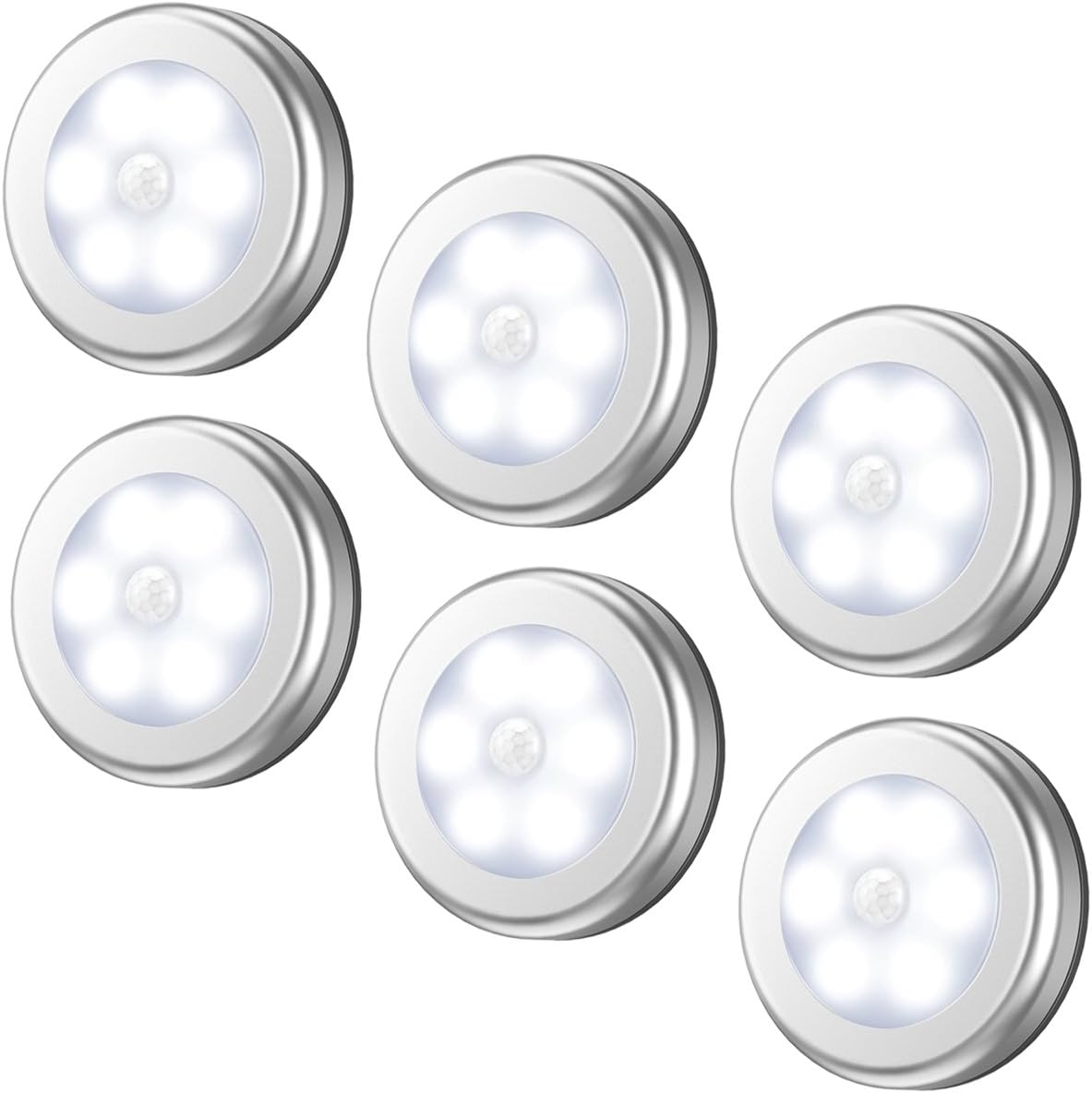
AMIR Upgraded Motion Sensor Light 6-Pack
“Six stick-anywhere motion-sensor lights for roughly the price of dinner — enough to light the entire nighttime path from bed to bathroom, and the single most cost-effective fall-prevention upgrade you can make.”
- PIR motion sensor turns each light on only in darkness and auto-off after 20 seconds, so they never waste battery during the day
- Cordless, stick-on mounting with adhesive pads — no wiring, no electrician, works in hallways, stairs, and bathrooms
- Tens of thousands of reviews make this one of the most-proven motion lights on Amazon, at a per-light price under $3
The tradeoff: They run on AAA batteries (not included), so keep a spare set on hand — brightness fades noticeably in the last days of battery life.
Who it's for: For any household that wants the cheapest effective night-time fall prevention. Skip it only if you dislike keeping spare batteries on hand for replacements.
What reviewers and owners say:- The adhesive is the weak link, not the sensor: owner-feedback summaries flag adhesive that weakens over time and does not stick well to wooden surfaces, with extra double-sided tape a common fix, but the magnetic plate design means you can pull the light off its mount to change batteries without disturbing the stuck plate.
- Placement decides whether the lights work at all: the sensor only fires in darkness, and the manufacturer's own troubleshooting notes that air currents from vents and nearby light sources can trigger the light unexpectedly or confuse the sensor, so hallway vents and night-lights near the path need a thought before sticking lights up.
- Battery life depends heavily on foot traffic: owner feedback reports lights lasting months in a closet but needing far more frequent changes in busy hallways, and the short auto-off window means a long staircase or hallway needs overlapping lights, or you walk back into darkness between sensors.
3Premium Pick350 lb Rated
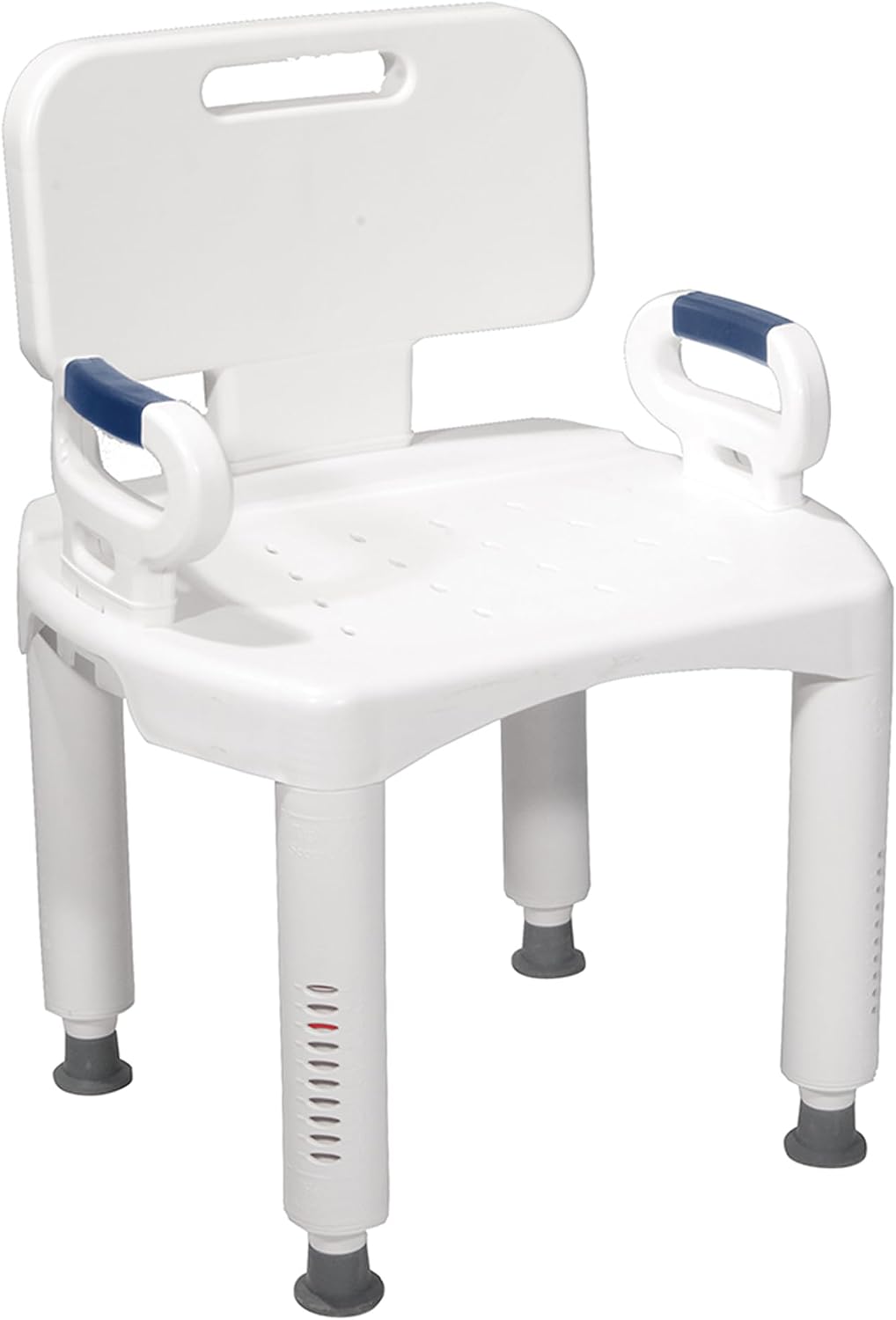
Drive Medical Shower Chair with Back and Arms
“A clinical-grade shower bench from the brand doctors' offices actually stock, with backrest, armrests, and a 350-lb capacity — the right answer when standing in the shower is no longer safe.”
- 350 lb weight capacity with aluminum frame, angled suction-tip legs, and drainage holes for maximum stability on wet floors
- Supportive backrest and armrests make sitting down and standing up in the shower far safer than a backless stool
- Adjustable seat height from 16 to 20.5 inches in half-inch increments, so it can be dialed in for shorter or taller users
The tradeoff: It's a full-size shower bench, not a compact stool — measure the shower floor first, since the 21.75-inch width can be tight in small tub-showers.
Who it's for: For users for whom standing in the shower is no longer safe. Skip it if the shower floor is too small for a full-size bench, since it needs real floor space.
What reviewers and owners say:- Dragging the chair is what loosens it: one long-term review of a Drive Medical shower chair notes the wing nuts under the seat work loose if the chair is dragged rather than lifted, and recommends a quick twist-check every few weeks, a small habit that keeps an otherwise rock-solid chair rock-solid.
- Suction feet are only as good as the floor under them: a review roundup warns that suction grip depends on a smooth, clean surface, so textured tub floors and grout lines reduce the very stability the chair is bought for, and the floor should be checked before the first shower, not after a slip.
- The generous seat is itself the tradeoff: one reviewer measured about four inches of clearance on each side in a standard-width tub and found it comfortable, while roundups warn that narrower tubs may not fit it at all, and one roundup notes the premium Drive chair's back and arms can come off, letting it simplify into a stool if needs change over time.
What to know before you buy
- Prioritize the bathroom first: most serious falls happen on wet tile, so safety rails and a shower seat beat every other purchase.
- Check weight capacity and real fit, not just star ratings — a rail rated below the user's weight or a bench too wide for the tub is money wasted.
- Battery-powered, motion-activated lights along the bed-to-bathroom path prevent the 3 a.m. falls that send seniors to the ER.
Frequently asked questions
Is the premium pick worth it over the best overall pick?
These picks solve different problems, so the comparison is about need, not luxury. The premium pick is a clinical-grade shower bench for when standing in the shower is no longer safe, while the overall pick is a toilet safety frame for getting on and off the toilet. If showering is the risk, the bench is worth it, and if toileting is the risk, the frame is the right buy. Many households need both.
What is the tradeoff with the best value pick?
The motion lights run on batteries that are not included, so you need spares on hand, and brightness fades noticeably as batteries run down. That is a small maintenance habit in exchange for a very low cost. In return you get enough lights to cover the entire night-time path, with automatic on-in-darkness and auto-off, and no wiring or electrician. For fall prevention per dollar spent, that tradeoff strongly favors the lights.
Where should I start for an aging parent?
Start with the bathroom and the night path, in that order. Most serious falls happen on wet tile, so a toilet frame and, if needed, a shower bench address the highest-risk moments. Then add motion lights along the bed-to-bathroom path, since darkness turns a safe walk into a risky one. Measure fit and weight capacity before ordering, and favor products that work out of the box without drilling or tools.